Overview
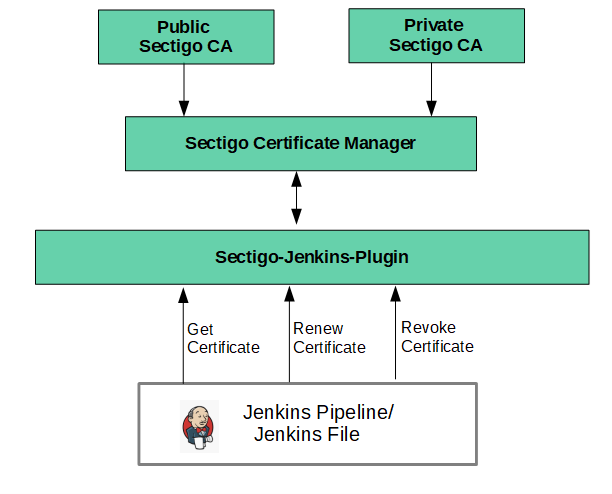
The Sectigo integration provides a seamless solution for the enrollment, collection, renewal, and revocation of SSL/TLS certificates issued by the Sectigo Certificate Manager (SCM) from within a Jenkins pipeline or file. The Sectigo Jenkins integration is distributed as a custom Jenkins PKI plugin.
This integration provides the following features:
-
RSA 2048, 3072, and 4096-bit private key generation
-
Certificate Signing Request (CSR)
-
Enrollment, collection, renewal, replacement, and revocation of certificates issued by SCM
The following certificate types are supported:
-
Domain Validation (DV): Single-domain, multi-domain, and wildcard certificates issued by Sectigo
-
Organization Validation (OV): Single-domain, multi-domain, and wildcard certificates issued by Sectigo or a supported third-party CA
-
Extended Validation (EV): Single-domain and multi-domain certificates issued by Sectigo or a supported third-party CA
-
Private SSL: Private SSL certificates issued by Sectigo or a supported third-party CA for internal use
For more information on SCM’s supported third-party CAs, see Understanding CA backends.
The Sectigo Jenkins integration supports the generation, renewal (manual or automatic), and revocation of certificates. Certificates can be configured for automatic renewal using a user-specific certificate expiry window. There are various types of SSL certificates that can be requested by supplying the appropriate configuration options.
| The types of SSL/TLS certificates available to you are based on your account setup. |
Package contents
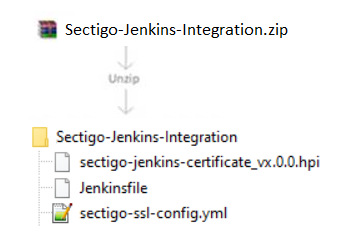
The Sectigo Ansible integration package contains the following:
-
sectigo-jenkins-plugin:
-
sectigo-jenkins-certificate.hpi: The Sectigo Jenkins plugin to be installed on Jenkins
-
Jenkins file: An example Jenkinsfile showing how Sectigo Jenkins plugin can be called to perform the supported certificate operations
-
sectigo-ssl-config.yml: An example configuration file for Sectigo Jenkins Integration
-